

What Trump's Embryo Adoption Program Is Really About
The federal government just classified frozen embryos as "children"
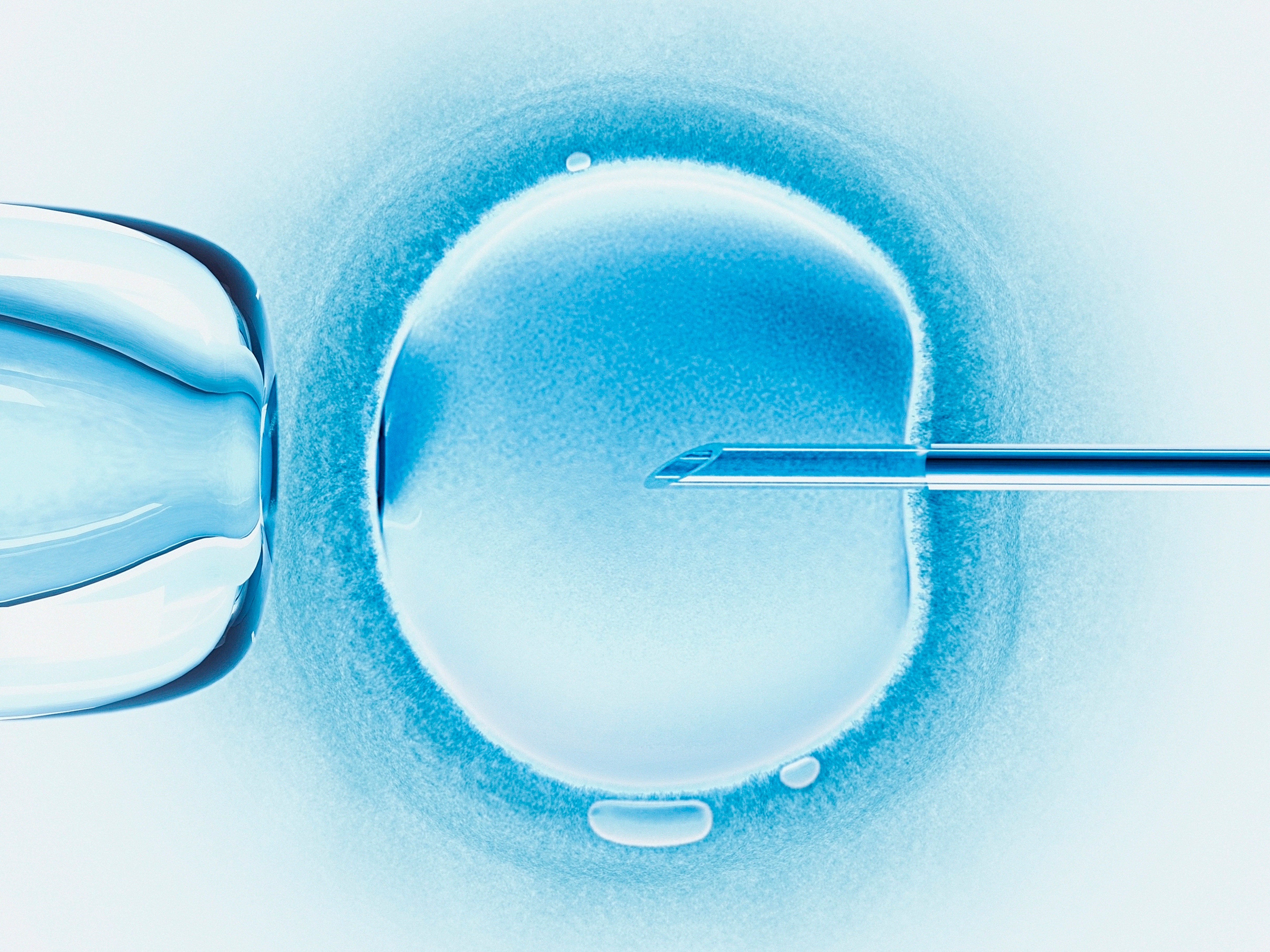
The Trump administration is allocating millions of federal dollars to an Embryo Adoption Program—classifying frozen embryos as “children who already exist” and funding services that treat adopting a frozen embryo exactly like adopting a child.
It’s a significant step toward enshrining fetal personhood—and a brazen move from an administration that’s been trying to avoid public abortion battles ahead of the midterms. After all, it wasn’t so long ago that Republicans faced a massive national backlash when Alabama’s Supreme Court declared that frozen embryos were “extrauterine children.”
The fallout was so bad for the GOP that Donald Trump released a statement distancing himself from the ruling and coming out in support of IVF.
I can only assume the White House thinks American voters won’t notice this total about-face because it’s tucked away in a call for grants from the Department of Health and Human Services (HHS). But the swooning response from anti-abortion organizations and conservative media will make it difficult for the administration to lay low—especially since those activists and writers are loudly celebrating what the White House is hiding from: enshrining fetal personhood and giving embryos full constitutional rights.
The document uses the word “child” or “children” nearly 40 times in reference to frozen embryos, calling the program “a response to the needs of children who already exist and are in need of a family,” and asking applicants to center “the wellbeing and best interests of the child.” The administration also refers to the “rights” of the embryo—a deliberate gift to the conservative legal groups eager to make that precise claim in court.
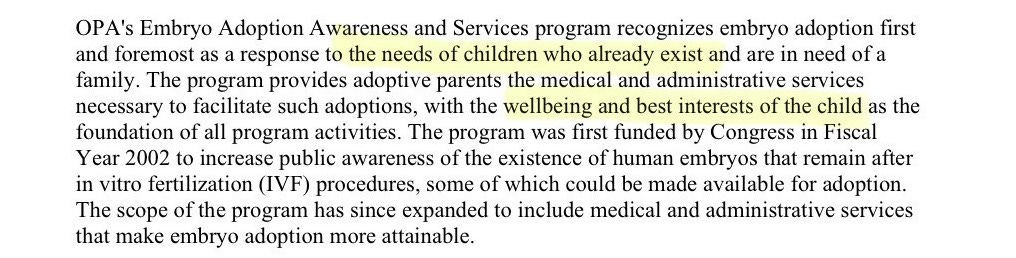
Now, the embryo adoption program itself isn’t new: it was established in 2002 by President George W. Bush in response to anti-abortion outcry over stem cell research. It started as a “public awareness” grant, meant to let Americans know that embryo adoption exists. (I’m sure readers my age and older remember the whole “Snowflake baby” thing.)
Bush would later go on to host children born from IVF at the White House, and say that “each of these human embryos is a unique human life.” What he did not say, however, was that these embryos were “children.” That’s what makes Trump’s grant change so significant: the administration isn’t just saying embryos are people—they’re writing that lie into federal policy.
The consequences of that shift go far beyond a single grant program. As Gretchen Borchelt of the National Women’s Law Center explains, the revised language “may seem small, but it could have enormous consequences for abortion, IVF treatment, and birth control access for people nationwide.”
Indeed, despite Trump’s promise to be “the father of IVF,” the document prohibits federal dollars from going anywhere near standard fertility treatment—bemoaning the “surplus” of existing embryos:
“No grant funds will be used for the donation of human embryos to embryo-destructive research. No grant funds will be used to pay for, subsidize, promote, or otherwise support discarding or destroying human embryos. No grant funds will be used to create new human embryos.”
The anti-abortion movement has been furious with Trump for declaring public support for IVF; this appears to be the White House’s way of smoothing over that rift.
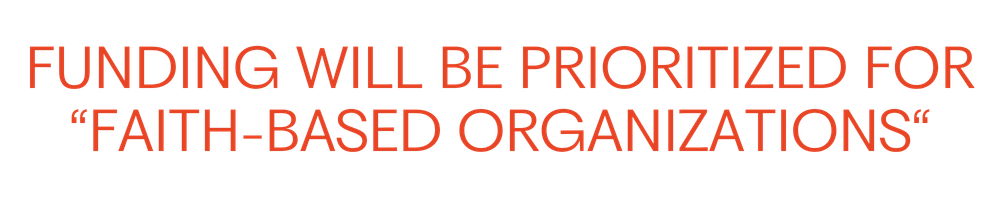
The document also calls for grant recipients to have a “respect for the dignity of life,” and implies that funding will be prioritized for “faith-based organizations.” What does that mean? Well, the right-wing Daily Signal decoded the language immediately:
“While the Biden administration awarded grants to three secular embryo adoption agencies who match embryos with same-sex couples, the Trump administration is looking to put faith-based organizations back at the center of embryo adoption.”
Translation: this is the government’s way of saying it won’t give money to programs that allow LGBTQ people to adopt embryos.
The administration also notes they want to “close the gap” between embryo adoption and traditional adoption—in part by requiring grantees to offer everything from home studies and background checks to health evaluations.
“Unlike traditional adoption, which is designed with the child’s best interest in mind and requires rigorous screening of prospective parents, embryo adoption currently lacks these safeguards, subjecting children to increased risk.”
By “closing the gap” and pretending that frozen embryos are children who need to be protected, the White House is doing something very pointed: they’re giving conservative legal organizations like Alliance Defending Freedom the foundation they need to argue for fetal personhood in the courts. As Borchelt says, “Defining frozen embryos as children gives anti-abortion extremists so-called ‘evidence’ that they could use to convince an extremist judge that embryos and fetuses deserve the same legal rights as people.”
This isn’t the first time that the White House has moved to codify fetal personhood: one of Trump’s first moves after inauguration was issuing an anti-trans executive order that defined human life as beginning “at conception.” And as I reported last year, the administration now classifies certain forms of contraception as “abortifacient birth control”—a false claim rooted in the same logic. This embryo adoption program is their latest attempt.
The White House thinks they can hide their agenda in obscure government documents that no one reads. They’re wrong. This is us—paying attention.
How sick do you have to be to come up with these schemes? It is so vile and it boggles the mind that someone is putting their energy into this rather than actually helping even a single child have easier access to nutrition, healthcare or any other vital resource.
Decades ago, I wrote an article with a Modest Proposal to solve the problem of abortion: simply remove embryos from people who don't want to be pregnant, and implant them into right-to-lifers. If they don't want to be pregnant, or don't have uteri? Too bad, it's time for them to walk the walk.